

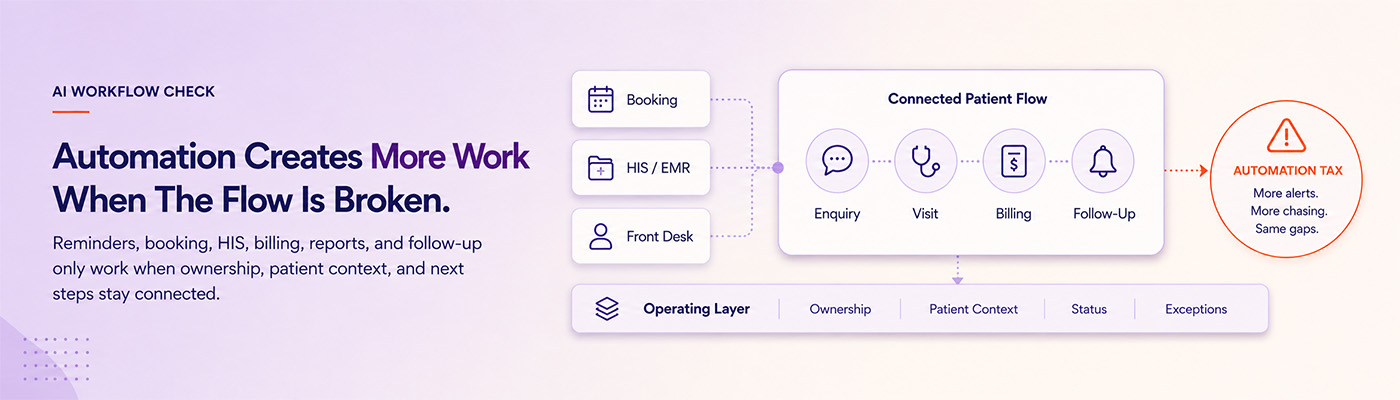
AI-Agency Is Optimising for Leads Your Hospital Cannot Fulfil
A hospital campaign starts performing well. Cost per lead falls. Appointment enquiries rise. One location begins generating more demand than every other branch.
Marketing increases the budget.
A week later, the call centre reports that the location has no available slots for the promoted specialty. Patients are being redirected, asked to wait or told that the doctor shown in the campaign is unavailable. Some accept another location. Many do not.
The campaign dashboard says performance improved. Operations says the hospital cannot fulfil the demand. Finance sees less realised revenue than the lead volume suggested.
The AI did not fail. It optimised for the result it was given: more leads at a lower cost.
The business failed to tell it which leads could actually be served.
AI Optimises the Metric, Not the Business Outcome
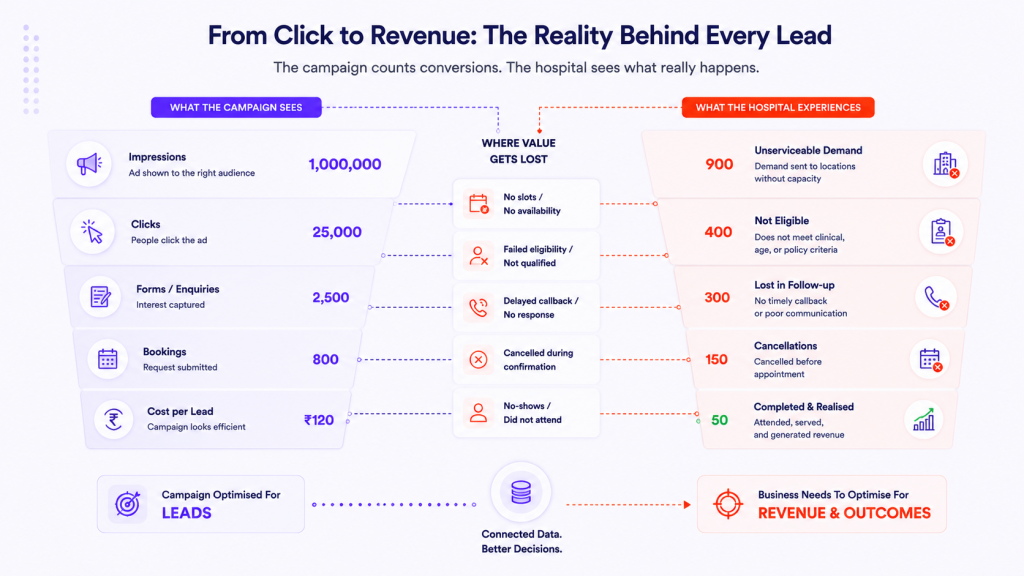
Campaign systems do not automatically understand hospital operations. They see impressions, clicks, enquiries, form submissions and bookings. Unless operational and financial data is connected, they may not see whether the patient was contacted, received an appointment, attended, completed the service or generated revenue.
This creates a dangerous gap between digital performance and business performance.
A campaign may attract patients for a popular specialty because that audience converts cheaply. But the promoted doctor may have no availability. Another campaign may generate high enquiry volume for a diagnostic package that only selected branches can fulfil. A third may produce appointment requests outside the serviceable area for home collection.
The marketing system sees demand. It does not see the restrictions behind that demand.
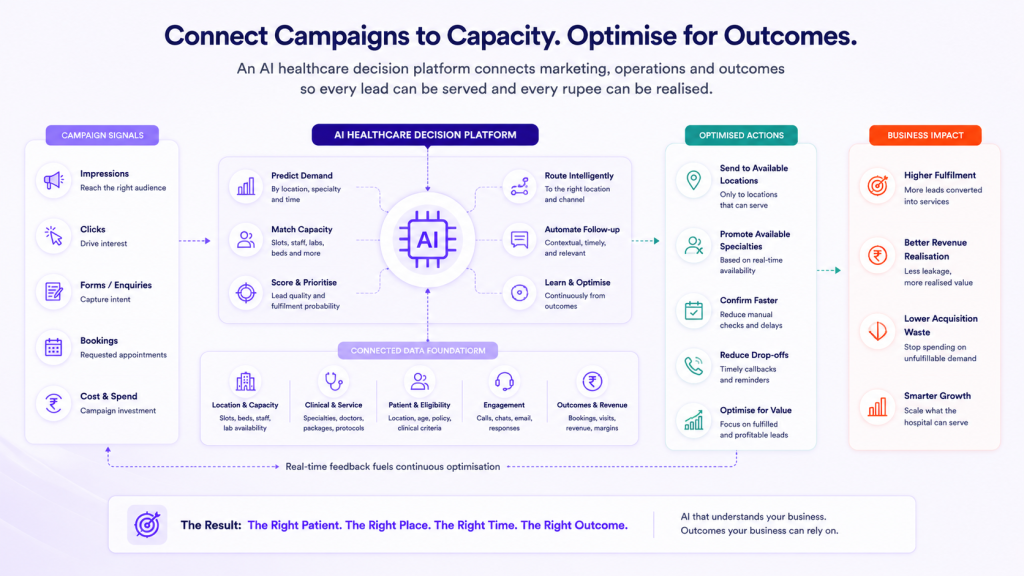
An AI healthcare decision platform should help the business connect campaign activity with capacity, eligibility, fulfilment and outcome data. Without that connection, AI can become extremely efficient at creating demand the organisation cannot use.
A Low-Cost Lead Is Not Always a Useful Lead
Marketing teams often optimise campaigns using measures such as cost per lead, form-completion rate and booked appointments. These metrics are useful, but they stop too early.
A lead may be inexpensive because:
- The selected location has no capacity.
- The requested specialty is unavailable.
- The patient is outside the serviceable area.
- The package is not offered at that branch.
- The enquiry does not meet eligibility requirements.
- The booking is cancelled during manual confirmation.
- The patient receives no callback within the required time.
If these outcomes are missing from the campaign data, the system can continue sending budget towards the wrong demand.
A healthcare campaign automation platform should therefore do more than manage audiences and follow-up sequences. It should react to the current ability of the business to serve the patient.
Where Campaign and Operations Usually Disconnect
Location capacity is invisible to marketing
The campaign may know which branch appeared on the landing page, but it does not know how many appointments, beds, diagnostic slots or service teams remain available.
The campaign continues attracting patients to the location with the strongest click and form-completion rates, even after that location becomes overloaded.
Doctor and specialty availability changes
Doctor schedules, clinic hours and procedure availability change frequently. A campaign configured at the beginning of the month may continue promoting a doctor whose next available appointment is several weeks away.
Marketing sees an active offer. Operations sees an unavailable service.
Bookings require manual confirmation
The website collects a preferred date, but the appointment is not confirmed until the call centre checks the hospital system. The campaign counts a conversion before the business knows whether the request can be fulfilled.
Eligibility is checked after acquisition
Some services depend on age, location, clinical criteria, insurance status or prior consultation. If these rules are applied only after the lead enters the CRM, the campaign may optimise towards audiences that generate volume but rarely progress.
Revenue does not return to the campaign system
Marketing sees the enquiry. Finance sees the final payment. When these records are not connected, the campaign cannot distinguish between cheap enquiries and commercially useful demand.
The Success Metric Needs to Move Further Down the Journey
The solution is not to stop using lead metrics. It is to connect them with later outcomes.
A better measurement chain would include:
- Enquiry generated
- Correct location and specialty identified
- Patient contacted
- Appointment confirmed
- Patient attended
- Service completed
- Payment or revenue recorded
- Repeat or follow-up journey started
This allows an AI healthcare decision platform to understand which demand produces a real business and patient outcome.
For example, one campaign may generate leads at twice the cost of another but produce a much higher appointment-confirmation and attendance rate. Another location may deliver fewer leads but have more capacity and faster response times.
The cheapest top-of-funnel result is not necessarily the best place to spend the next unit of budget.
What Data Should Reach AI-Agency?
AI-led activation becomes more useful when it can work with signals from all three WeAddo UEP suites.
Experience Suite signals
The Experience Suite can show what the patient searched for, which location they selected, which service page they visited, whether they started booking and where they dropped off.
Operations Suite signals
The Operations Suite can provide current slot capacity, assignment status, callback ageing, service availability, branch workload, exception queues and fulfilment progress.
Data Suite signals
The Data Suite can connect campaign, CRM, appointment, operational and revenue data into a governed view. A hospital performance analytics platform should help leadership compare campaign activity with confirmation, attendance, service completion and realised value.
AI-Agency can then activate campaigns using the full outcome rather than the cheapest visible action.
The current WeAddo structure positions AI-Agency as a growth-activation capability built on top of the platform, not as a replacement for the Experience, Operations and Data foundations. This matters because AI cannot make reliable growth decisions when customer journeys, operational capacity and outcome data remain disconnected.
What a Connected Optimisation Flow Should Look Like
1. Capture specific patient intent
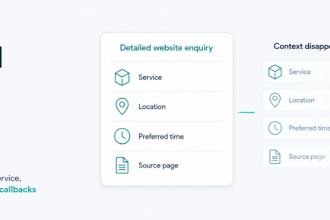
The campaign and landing journey should retain the service, specialty, location and requested action rather than creating a generic lead.
2. Check operational availability
Before increasing spend, the system should understand whether the promoted branch or service has realistic capacity.
3. Pass the request to the correct owner
A healthcare campaign automation platform should connect the enquiry with the relevant CRM, call-centre or branch workflow and trigger a timed next action.
4. Return the outcome
Contacted, confirmed, attended, cancelled, no-show and completed-service statuses should flow back into the data model.
5. Optimise against fulfilment
Campaign decisions should consider confirmed and completed outcomes not only submitted forms.
6. Protect operational limits
If one location reaches capacity, the campaign should reduce spend, change the offer, suggest another location or redirect demand towards an available service.
Measure Demand the Hospital Can Actually Use
A hospital performance analytics platform should help compare marketing volume with operational completion. Useful measures include:
- Enquiry-to-contact rate
- Contact-to-confirmation rate
- Confirmation-to-attendance rate
- Leads rejected because of capacity or eligibility
- Location-level callback time
- Cancellations caused by unavailable services
- Cost per attended appointment
- Cost per completed service
- Revenue by campaign and location
- Campaign spend directed towards locations already at capacity
These measures help marketing and operations work from the same outcome.
Run This Audit on Your Best-Performing Campaign
Choose the campaign currently reporting the lowest cost per lead or highest enquiry volume. Then check:
- Which locations received the leads?
- Did those locations have capacity?
- How quickly were patients contacted?
- How many appointments were confirmed?
- How many patients attended?
- How many requests were redirected or rejected?
- Which services were completed?
- How much revenue was realised?
- Did the campaign system receive any of these outcomes?
If the campaign knows only that the form was submitted, it is optimising with incomplete information.
Where Does Your Growth Stop?
Growth can stop when marketing generates demand faster than operations can serve it. It can stop when AI pushes more budget towards a branch with no available slots or when low-cost leads repeatedly fail eligibility, confirmation or attendance.
The answer is not less AI. It is better-connected AI.
A reliable AI healthcare decision platform should work from experience, operational and revenue signals. A connected healthcare campaign automation platform should route demand and respond to capacity changes. A useful hospital performance analytics platform should show which campaigns produce completed outcomes, not merely cheap enquiries.
Conclusion
AI will optimise whatever success signal the business gives it.
If the signal is a form submission, it will find more forms. If the signal includes capacity, confirmation, attendance and revenue, it can support better growth decisions.
Before increasing the budget on your best-performing campaign, trace 100 leads from click to completed service. Count how many the hospital could not fulfil and identify whether that information ever reached the campaign system.
That is where AI-led growth is either connected or wasted.
Audit 100 campaign leads and compares low-cost acquisition with actual appointment confirmation, attendance and realised revenue.
FAQs
An AI healthcare decision platform combines patient, campaign, operational and outcome data to support better decisions about demand, capacity and growth.
A healthcare campaign automation platform manages campaign and patient-communication workflows while connecting enquiries with routing, follow-up and journey events.
A hospital performance analytics platform connects campaign activity with appointment confirmation, attendance, service completion and revenue.
A lead may be inexpensive but impossible to serve because of unavailable slots, location restrictions, poor eligibility or slow follow-up.
Hospitals should look beyond form submissions and track cost per confirmed appointment, attended appointment, completed service and realised revenue.





Leave a Reply