One Doctor Update, Five Manual Edits: The Hidden Cost of Duplicate Content in Hospital Websites
by
vikas weaddo
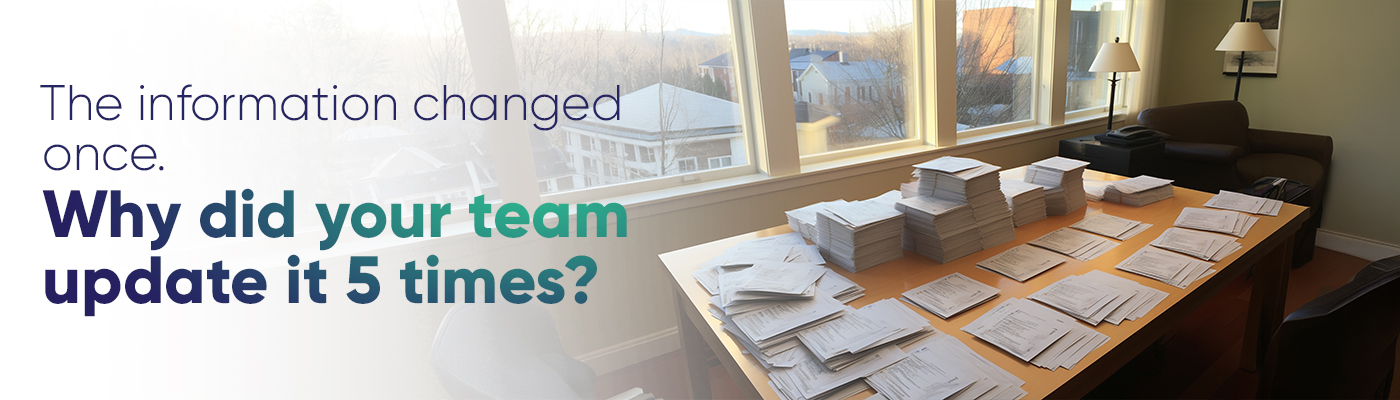
A doctor’s consultation timing changes once. The website team updates the profile page, then the location page, then the speciality page, then a campaign page. Someone checks whether the same detail appears anywhere else.
The information changed once. The work did not.
That is one of the most common content management challenges in multi-location healthcare: the same fact exists in several places, so a routine change creates repeated editing, checking and approval work. An enterprise CMS should reduce that repetition, not simply give teams another place to perform it.
Quick answer: if one doctor update creates several manual edits, the problem is usually not the editor. It is the way the content is stored and reused.
Why does one doctor change create so much work?
Doctor information rarely appears on only one page. The same clinician may be listed on a doctor profile, hospital page, speciality page, search result, campaign page and booking journey.
If each page contains its own copy, each copy becomes another item to maintain. That is how small updates turn into recurring content management challenges.
These content management challenges get harder as Indian hospital groups add doctors, specialities and locations. More pages do not just mean more content. They mean more places where the same information can drift apart.
A well-designed enterprise CMS should separate the source information from the pages displaying it. Instead of treating every page as the owner of the doctor’s details, the system maintains an approved doctor record and lets relevant experiences reuse it.
The hidden cost is not the edit. It is the repetition.
Changing a consultation time may take a minute. Finding every copy, checking permissions, waiting for approvals and verifying the result can take much longer.
That extra effort is easy to miss because it is spread across people and systems.
Typical signs include:
The same doctor information being typed into several pages;
Marketing asking local teams to confirm which version is current;
Content teams maintaining spreadsheets alongside the website;
Developers being pulled into routine changes;
Old information remaining live because one page was missed.
The useful KPI here is manual updates per change. Pick one common doctor-information change and count how many separate edits it creates. If the answer is five, the hospital is paying for the same information five times.
What should the better model look like?
The simpler model is: maintain the fact once, approve it once, reuse it wherever appropriate.
A doctor record can hold structured fields such as speciality, credentials, locations, consultation timings, services, languages and the relevant next action. An enterprise CMS can then use those fields across approved page patterns instead of recreating them as separate pieces of copy.
This is where a healthcare customer experience platform also benefits. Search, doctor discovery, location experiences and booking journeys are only as reliable as the information feeding them.
If one approved record changes, the relevant digital experiences should be able to use the updated value without requiring the team to remember every place where it was copied.
What does this change for hospital teams?
For content teams, it means fewer repetitive edits and less time checking versions.
For digital teams, it reduces routine specialist dependency.
For operations, real-world changes can reach customer-facing channels faster.
For patients, the same doctor is less likely to appear with conflicting information across the journey.
Those outcomes are connected, but they should still be measured separately.
Track:
Manual updates required per doctor change;
Update cycle time;
Stale or incorrect information rate;
Consistency errors across pages;
Content correction volume.
A healthcare customer experience platform may support the downstream journey, but the first win is simpler:make the underlying information easier to maintain correctly.
Where does WeAddo fit?
Within WeAddo’s Experience Suite, Content Manager & Structured Content can support this operating model by treating doctor, speciality and location information as reusable structured records.
The mechanics are straightforward: approved information is maintained in defined fields, reused through relevant page or experience patterns, and governed through the required publishing process.
The point is not to replace every hospital system. It is to reduce the repeated digital work surrounding information that already exists.
An enterprise CMS becomes valuable when the content model removes work from the process. A healthcare customer experience platform becomes more useful when the experience receives current, consistent information.
That is why a healthcare customer experience platform depends on disciplined content operations.
How can you tell if duplicate content is costing you?
Run a simple test.
Take the last five doctor changes your hospital made. For each one, count every page edited, every person involved, every approval required and every correction made afterwards.
Then ask: how much of that work was genuinely necessary, and how much existed because the same information had been copied into multiple places?
If the same pattern appears repeatedly, you have found one of the content management challenges worth fixing first.
The goal is not fewer pages. It is fewer unnecessary edits.
One doctor’s information should change once. Your team should not have to chase it around the website.






Leave a Reply