The Change Blast Radius: Why One Business Decision Creates Work Everywhere
by
vikas weaddo
A business changes one thing.
A price. An offer. A location. A policy. A product fact. An eligibility rule.
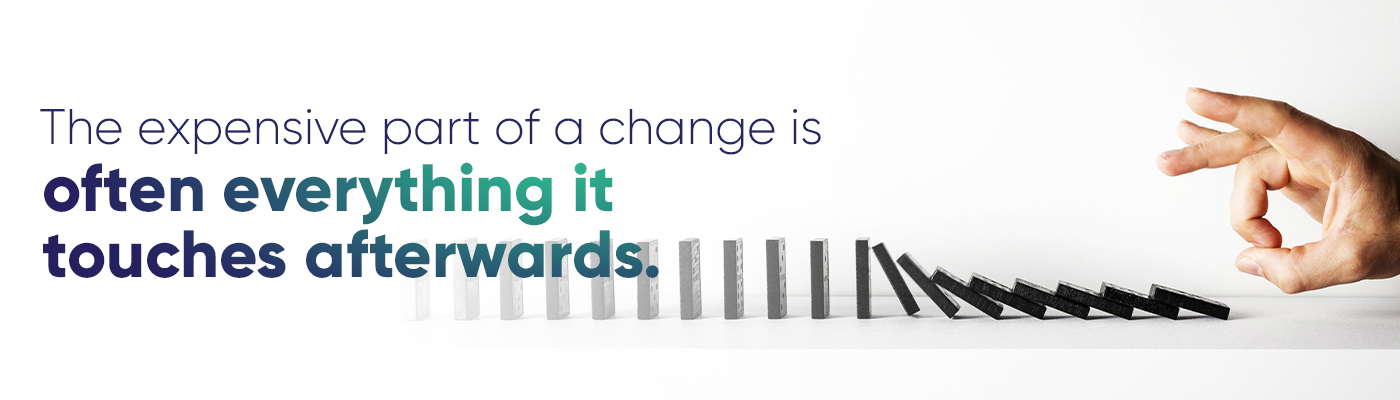
The decision takes five minutes. Then the real work begins.
The website needs changing. Someone remembers the app. Sales has an old document. The CRM template still carries the previous wording. An agency has another version. A local team copied the old information last month.
This is the blast radius of fragmented systems: one business decision creates multiple operational changes because the same truth lives in several places.
Stop asking “how long will the edit take?”
That question looks at the smallest part of the job.
Ask instead: How many places does this decision affect?
That changes the conversation immediately.
A text edit taking two minutes is not a two-minute job if six copies need to be found, verified and corrected.
The issue is particularly visible when disconnected systems each contain their own version of the same information.
The first edit is easy.
Remembering every edit is the work.
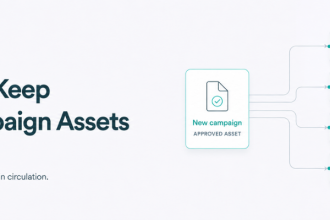
Draw the blast radius
Take one routine change and put it in the centre of a page.
Now draw every place that uses it.
For example: Offer validity changed
Around it might sit:
Website
Landing pages
Sales deck
Email template
CRM response
Partner portal
Local asset
Advertisement
You now have a visual map of maintenance risk.
This is more useful than simply complaining about SaaS sprawl because it shows where the sprawl creates actual repeated work.
Ten tools that rarely share information may be fine.
Three tools that require the same high-frequency fact to be manually maintained can be expensive.
Not every duplicate is a problem
Duplication can sometimes be intentional.
A legally approved document may need to remain fixed. A local branch may legitimately use different information. Historical records should not always change when a current fact changes.
The objective is therefore not “one copy of everything”.
The better question is: Which information should have one approved source, and which versions genuinely need independence?
That is how fragmented systems become a manageable content and operational question rather than a generic technology complaint.
Three types of blast radius
Most repeated work falls into three categories.
Information blast radius: The same fact appears in several places.
Workflow blast radius: One decision triggers several approvals or tasks.
Reporting blast radius: One change requires multiple systems or teams to update how it is recorded.
These can overlap.
That is why simply adding another integration does not automatically solve disconnected systems. The business also needs clarity about ownership and which source is authoritative.
Use frequency to decide what deserves fixing
Do not redesign the entire stack because one rare change was inconvenient.
Look for repeated changes with a large blast radius.
A business fact that changes every week and requires six manual updates is a stronger candidate than something changed once a year.
This is a more useful way to evaluate SaaS sprawl: not “How many tools do we have?” but “Where do those tools make us repeat the same work?”
Where WeAddo bridges the gap
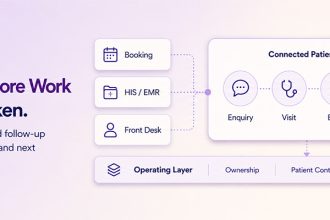
WeAddo can help businesses manage reusable information and connected digital operations around existing systems, depending on the specific workflow.
The objective is not automatically to replace the tools creating the blast radius.
Sometimes the better answer is to establish an approved source and make the relevant experiences use it more consistently.
Start with one change from last week.
Put it in the centre.
Draw everything your team had to touch.
That picture will tell you more about fragmented systems than an application inventory ever will.





Leave a Reply