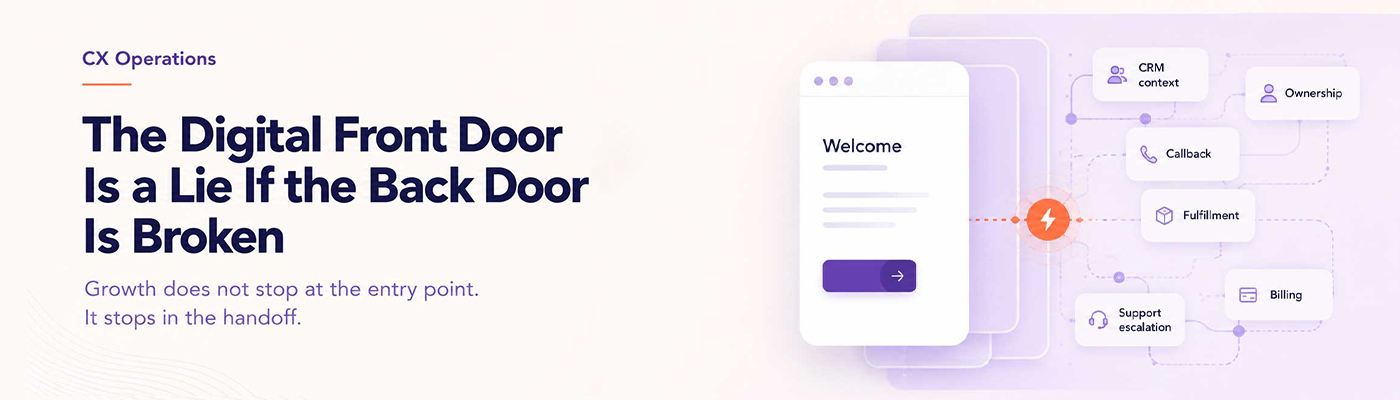
The Digital Front Door Is a Lie If the Back Door Is Broken
by
vikas weaddo
Everyone wants a better front door. Fewer teams want to look behind it.
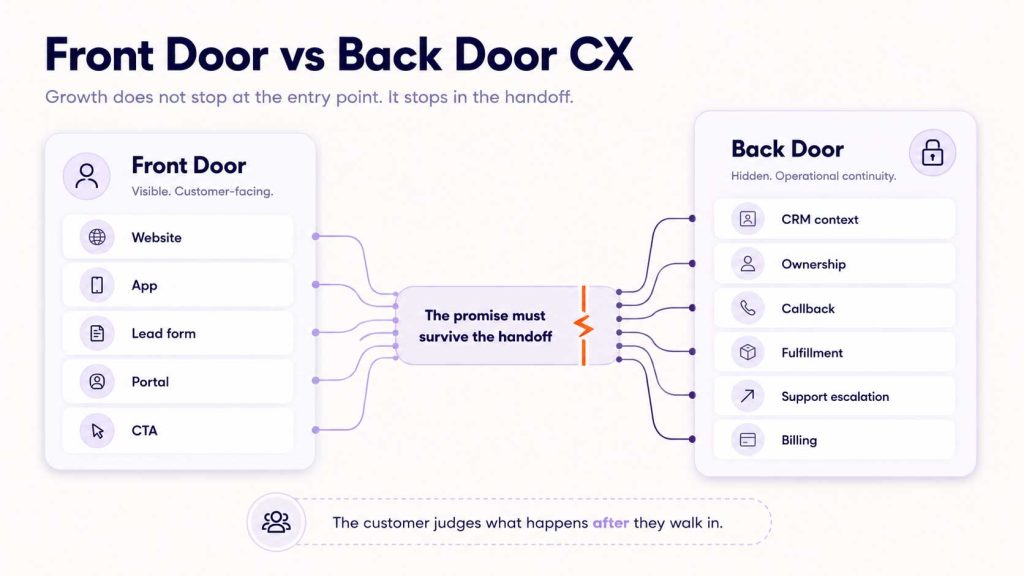
Businesses love the phrase “digital front door.” It sounds modern, welcoming, and boardroom-safe. Website. Landing page. App. Portal. Booking flow. Lead form. Customer login. Nice interface. Clean CTA. Very grown up.
Then the customer walks in.
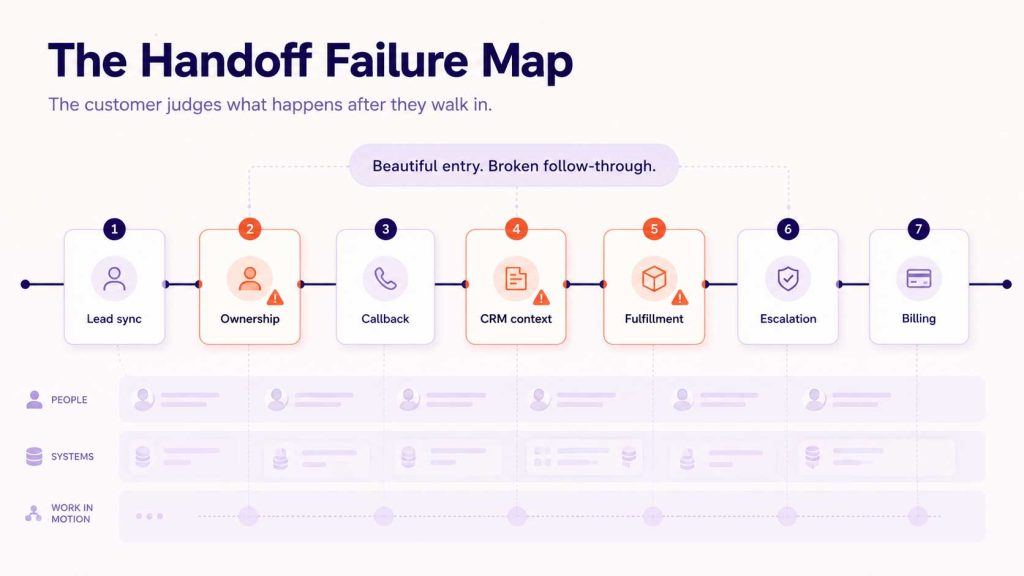
The lead does not sync. The callback never happens. The CRM field is wrong. The support note is missing. The sales rep repeats questions. The operations team has no context. Billing has a different version of the truth. Suddenly the beautiful front door opens into a supply closet.
Here is where the illusion breaks: A beautiful front door cannot save a journey that falls apart the second the customer needs fulfillment, support, onboarding, billing, or a handoff between teams.
The journey does not break where designers are looking
Most teams obsess over the visible layer because it is easier to see. The hero section, the form, the button, the confirmation screen. These things matter. But they are not the whole experience.
Customers judge the journey after the click: the handoff, the follow-up, the promise, the status update, the service recovery, the fulfillment, the renewal, the support escalation.
If the back office is broken, the front office becomes theatre.
This is where most digital transformation loses the plot
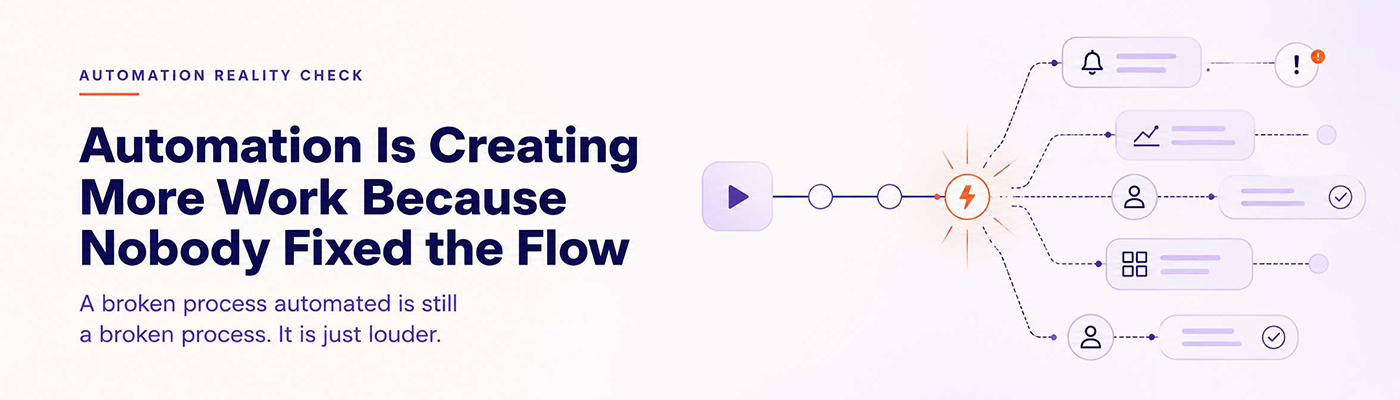
A brand launches a new portal and calls it transformation. But the portal still feeds a manual queue. The app looks premium, but the service team cannot see the customer history. The lead form converts beautifully, but sales receives incomplete context. The campaign performs, but operations cannot fulfill demand fast enough.
The dashboard says the digital front door is working. The customer experience says the house is on fire.
Growth does not stop at the front door. It stops where the internal system fails to keep the promise.
The operational truth: Most digital friction is not caused by a bad button. It is caused by a broken backstage pretending the website is the whole experience.
The broken back door has a pattern
You see it in handoffs with no owner. CRM records with missing context. Service teams cleaning up promises made by marketing. Sales teams chasing leads with no intent data. Customers repeating themselves across channels. Operations learning about demand after the campaign has already created it.
None of these problems feel glamorous enough for a launch deck. That is why they survive.
The ugly truth is that customer experience is often decided by the least photogenic workflow in the business.
A better digital front door starts behind the scenes
The fix is not making the form prettier. It is designing what happens after the form.
Map the journey from entry to outcome. Define owners for every handoff. Connect CRM, marketing automation, sales workflows, service systems, billing, and fulfillment. Build SLAs into the process. Make status visible. Remove duplicate requests. Design exception paths. Measure the promise, not only the click.
And no, the answer is not another dashboard unless someone is accountable for what the dashboard exposes.
Weaddo can make the hidden journey visible
Weaddo can position this as one of the clearest transformation problems for modern brands: the experience layer and the operating layer need to be designed together.
That means connecting digital touchpoints with CRM, automation, data intelligence, service design, and operational workflows. It means making sure the promise made on the front end can actually be fulfilled on the back end.
Before you rebuild the front door again, check whether the business knows what happens after the customer walks through it.







Leave a Reply