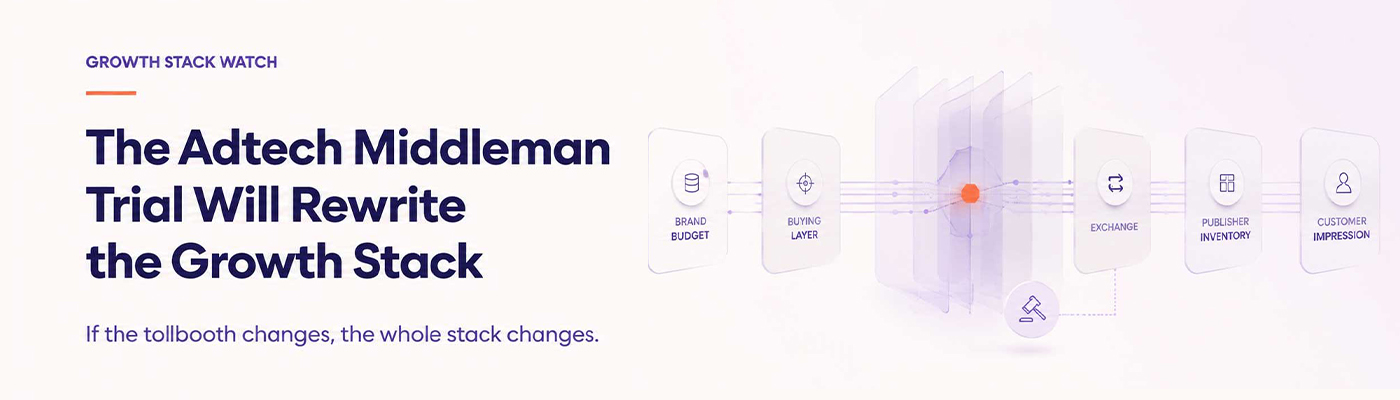
The Adtech Middleman Trial Will Rewrite the Growth Stack
by
vikas weaddo
The most important martech story may not be another model launch.
AI gets the headlines because it is shiny, dramatic, and very good at generating launch videos. But one of the most consequential growth stories is happening somewhere less glamorous: antitrust courtrooms and adtech remedy debates.
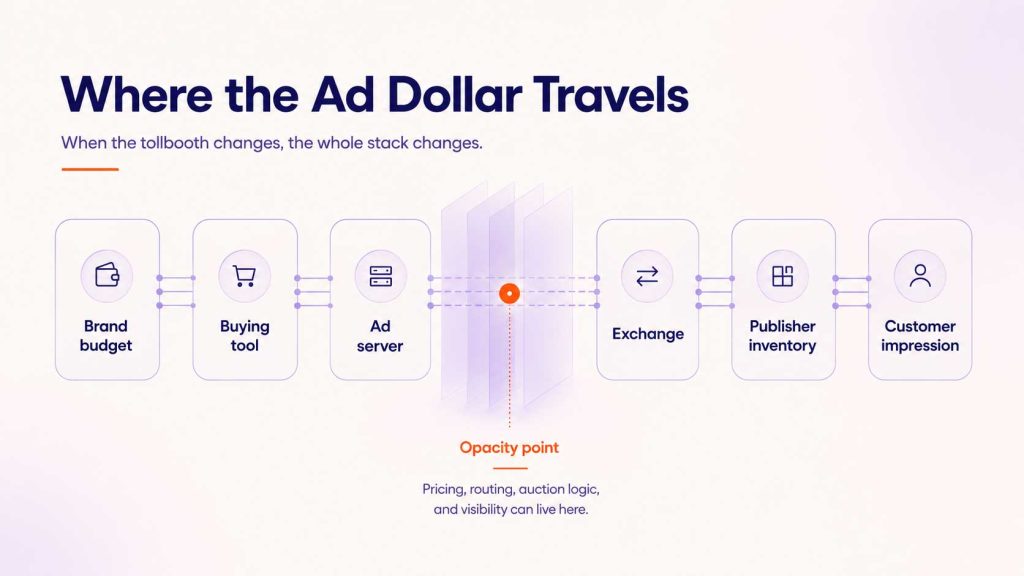
The question is not just whether one company wins or loses. The question is what happens when the middle layers of digital advertising get challenged: ad servers, exchanges, auctions, pricing power, publisher access, measurement, and the machinery marketers rarely see but constantly pay for.
If the tollbooth changes, the stack changes.
The part growth teams should not ignore: Adtech plumbing only feels boring while it works. When the rules change, the brands that understood their media stack will move faster than the ones that outsourced every hard question to a black box.
Adtech is the plumbing nobody wants to understand until it leaks
Growth teams often think in campaigns: audience, creative, bid, landing page, conversion. Underneath that sits a dense marketplace of intermediaries deciding how ads are bought, sold, priced, routed, measured, and monetized.
That middle layer has always been complicated. Complexity is not automatically bad. But opacity is expensive. When marketers cannot clearly see how money moves, who takes what cut, and which systems influence visibility, strategy becomes partly a guessing game with dashboards.
The problem is not that middlemen exist. The problem is when the middle becomes the market.
Why this matters for brands, not just publishers
It is tempting to file adtech antitrust under “publisher problem” or “Big Tech drama.” That would be lazy.
Brands are affected by the same architecture. Media costs, auction dynamics, measurement quality, inventory access, attribution, and platform dependency all shape growth performance. If remedies force changes in interoperability, auction transparency, divestitures, or data flows, marketers may need to rethink how they buy, measure, and govern media.
The legal story is also a stack story.
The useful anxiety: If your growth model depends on intermediaries you cannot explain, audit, or replace, that is not scale. It is dependency with nicer dashboards.
The growth team mistake is waiting for the verdict to become obvious
Many teams wait until platform changes hit their dashboards before they react. That is how you end up calling every structural shift an algorithm update.
The smarter move is scenario planning. What happens if sell-side and buy-side tools become more separated? What if auction transparency improves? What if measurement signals shift? What if platform bundles lose some gravity? What if publishers gain leverage? What if the opposite happens and the status quo remains, but scrutiny keeps rising?
Growth leaders do not need to become lawyers. They do need to understand where their acquisition engine depends on someone else infrastructure.
A better media stack is less enchanted by black boxes
The fix is not abandoning performance marketing. Please do not turn legal uncertainty into strategy cosplay.
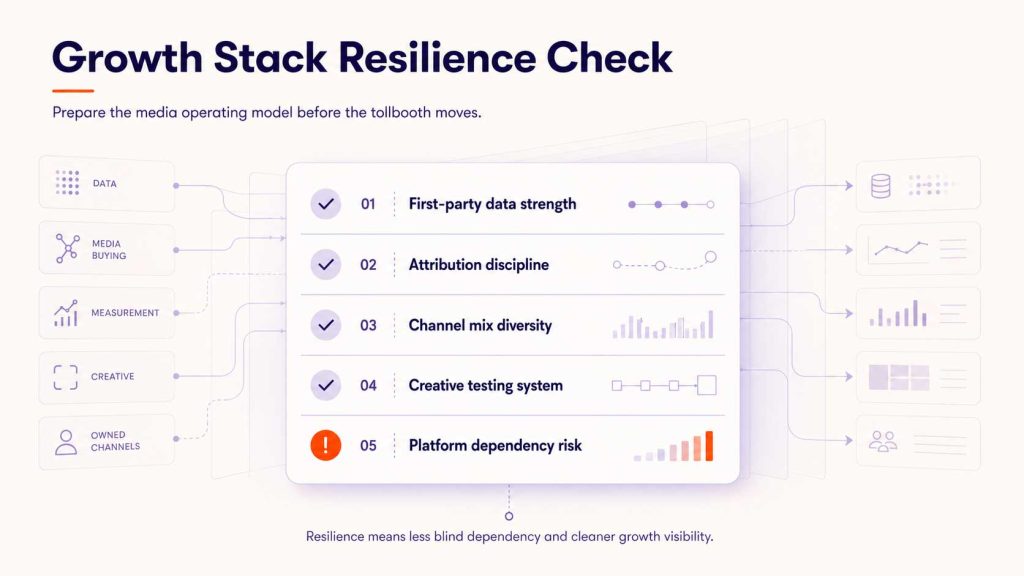
The fix is building a media operating model that can survive platform turbulence. Stronger first-party data. Cleaner conversion architecture. Better creative testing. Channel diversification. Clearer incrementality thinking. More disciplined measurement. A sharper view of where the brand is paying rent versus building assets.
If your growth stack only works when the middle layer remains opaque and friendly, it is not a strategy. It is a dependency with good reporting.
Weaddo can help brands prepare before the stack shifts
Weaddo can frame this as a strategic readiness problem: media, data, CRM, attribution, automation, content, and customer journey design need to become more resilient as the advertising infrastructure changes.
The brands that win will not wait for the market to become simple. It will not. They will build growth systems with cleaner data, less blind dependency, stronger owned channels, and measurements that can handle turbulence.
Before the tollbooth moves, map how much of your growth depends on it.






Leave a Reply