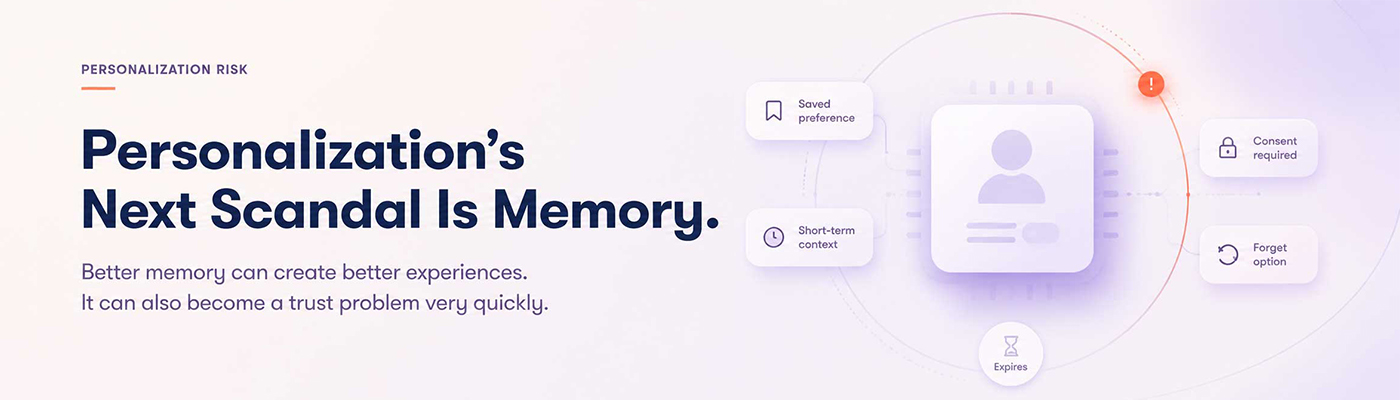
Personalization is about to get a memory upgrade. That should make everyone slightly nervous.
The old personalization model was mostly transactional. Customer viewed this. Customer bought that. Customer clicked something at 11:43 p.m. Send the email. Show the offer. Pretend the journey is intelligent.
AI memory changes the stakes. Systems can remember preferences, patterns, past conversations, unresolved needs, emotional cues, and context over time. That can make experiences feel dramatically more useful.
It can also make them feel invasive, inaccurate, or weirdly intimate.
Here is where personalization gets weird: Memory can feel magical when it helps. It can feel invasive when the customer cannot tell why the brand remembers, how long it remembers, or how to make it forget.
The best system is not the one that remembers the most
This is the point many teams will miss. More memory is not automatically better personalization. Sometimes more memory just means more ways to make the customer uncomfortable.
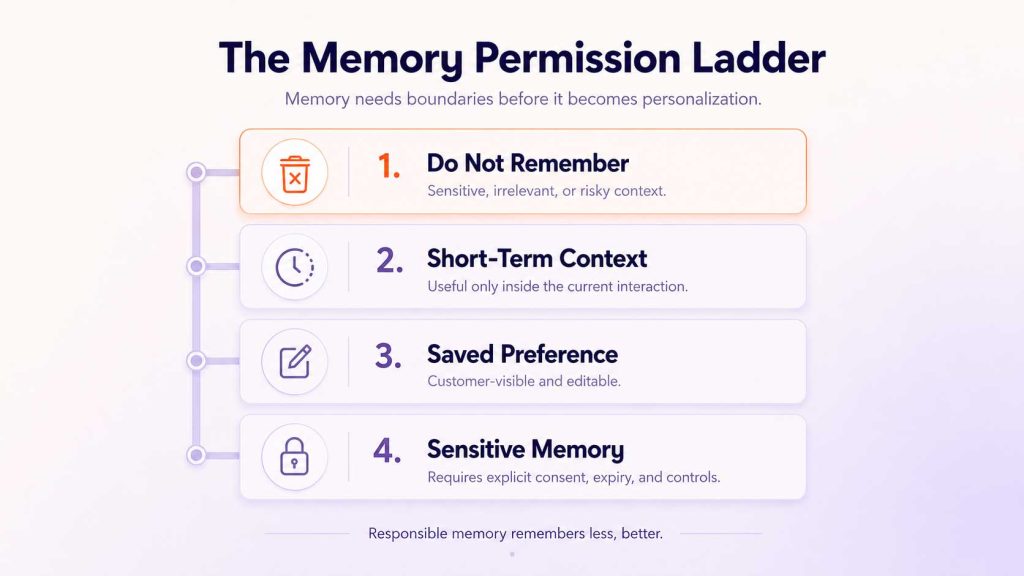
The better system remembers the right things under the right permissions. It knows what is useful, what is sensitive, what is temporary, what should expire, what the customer can edit, and when memory should not be used at all.
Personalization without boundaries is not premium. It is clingy.
Memory creates a new kind of customer data risk
Traditional customer data often sits in fields: name, location, purchase history, segment, preference. Memory is slipperier. It can include inferred needs, behavior patterns, relationship context, intent, tone, and sensitive details disclosed in conversation.
That makes governance harder. Who decides what gets remembered? How does the customer review it? What if the memory is wrong? What if it is technically accurate but no longer relevant? What if it is used in a context where the customer did not expect it?
The scandal will not be “brand used data.” The scandal will be “brand remembered something it should not have used that way.”
The line to remember: The next personalization scandal will not be about whether brands can remember. It will be about whether they deserved to.
Accuracy matters more when memory feels personal
A wrong product recommendation is annoying. A wrong memory can feel intimate and insulting.
Imagine a customer who bought a medical product once for someone else and keeps getting treated as if it defines them. Or a buyer who mentioned budget pressure during one support chat and later receives messaging that feels like it is exploiting vulnerability. Or a premium customer whose preferences changed, but the system keeps dragging an old version of them into every interaction.
The problem is not personalization. The problem is stale context pretending to be insight.
What responsible memory design should include
Brands need memory rules before memory scale. Define what can be remembered, what must never be remembered, what expires, what needs explicit consent, what customers can view or edit, and when human review is required.
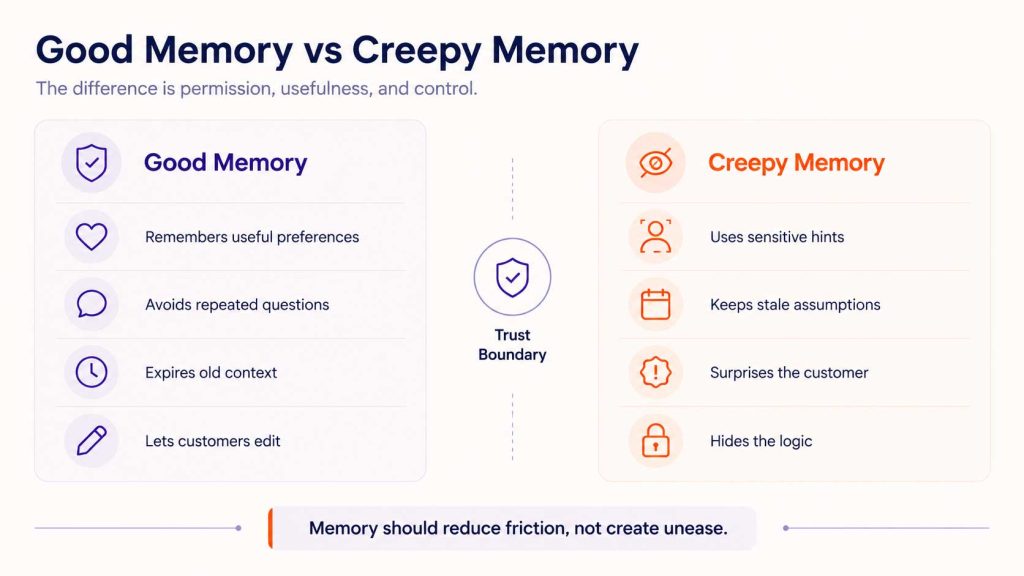
Memory should be transparent enough to build trust and quiet enough not to make every interaction feel like surveillance. It should reduce friction, not create a sense that the brand has been taking notes behind the curtain.
The obvious answer is not “remember everything.” The useful answer is “remember only what improves the relationship and can survive a trust test.”
Where Weaddo can make this ownable
Weaddo can help brands design personalization systems around memory ethics, not just model capability. That means connecting CRM, consent, preference management, data governance, automation, journey design, and customer experience into a practical memory operating model.
The future of personalization is not just AI-powered. It is permission-aware, context-sensitive, and emotionally intelligent enough to know when not to use what it knows.
Before you build a system that remembers more, decide what your brand deserves to remember.







Leave a Reply