Personalization’s Next Scandal Is Memory: Why E-commerce Brands Need Boundaries Before AI Personalization
by
vikas weaddo
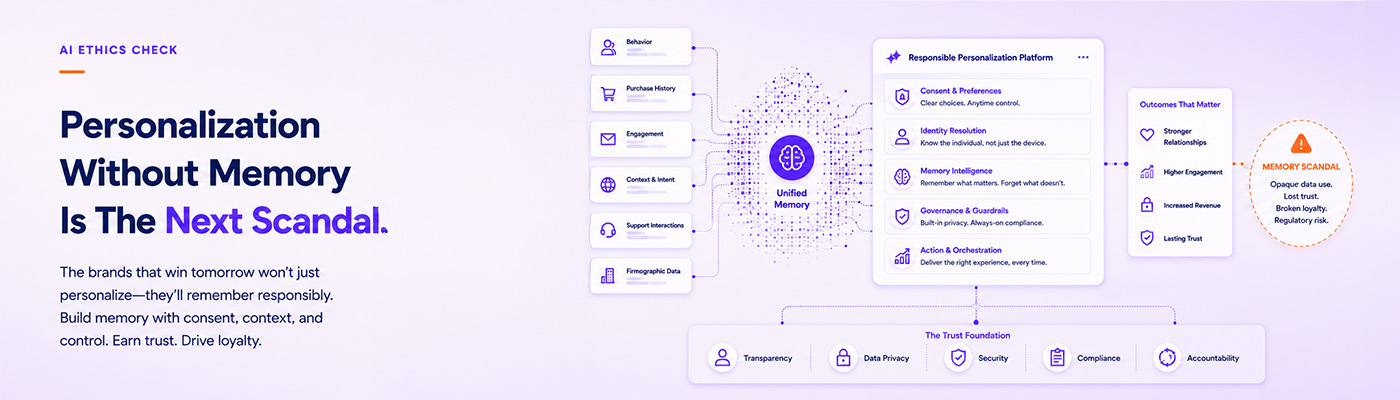
Personalization is getting a memory upgrade. E-commerce brands should be careful.
For years, e-commerce personalization was mostly transactional. A shopper viewed a product. Added something to cart. Bought once. Clicked an email at midnight. The system responded with a recommendation, offer, reminder, or retargeting ad and called it intelligence.
AI memory changes the game. A brand can now remember preferences, browsing patterns, past conversations, size choices, shade matches, delivery complaints, support history, purchase intent, loyalty behavior, and unresolved needs over time. Done well, this can make the shopping experience feel easier, faster, and more relevant. Done badly, it can make the brand feel clingy, inaccurate, or uncomfortable.
That is the real risk for e-commerce leaders. A retail personalization platform should not simply remember more. It should remember better. If a shopper cannot tell why the brand remembers something, how long it remembers it, where that memory came from, or how to correct it, personalization starts looking less like service and more like surveillance with a coupon.
The best personalization system is not the one that remembers the most.
This is where many e-commerce teams will get it wrong. More memory does not automatically mean better personalization. Sometimes it only gives the brand more ways to annoy the customer with confidence.
A shopper buying a gift should not be permanently treated like that product defines them. A customer who once complained about delivery should not keep getting defensive messaging. Someone who browsed a category out of curiosity should not be chased for weeks. A buyer whose size, budget, address, skin type, style, or intent has changed should not keep seeing an old version of themselves reflected back by the brand.
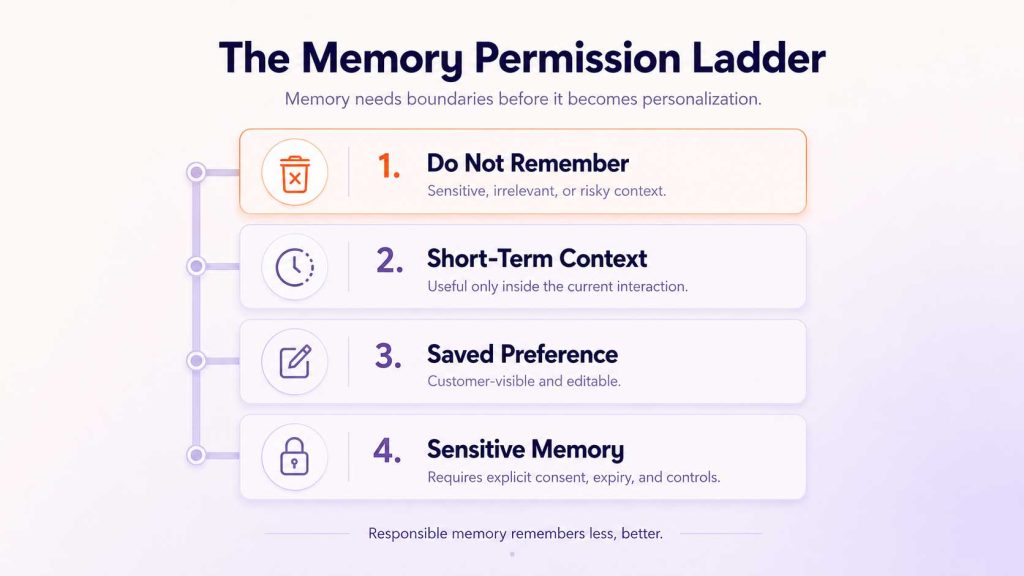
The better system remembers what improves the shopping journey. It knows what is useful, what is sensitive, what is temporary, what should expire, what the customer can edit, and when memory should not be used at all.
That is where a retail customer data platform, retail CDP platform, or customer data platform retail setup needs more than profile stitching. It needs memory rules. Without boundaries, personalization does not feel premium. It feels needy.
Memory creates a new kind of customer data risk.
Traditional e-commerce data usually sits in clear fields: name, location, purchase history, segment, loyalty status, product views, cart events, preferences, returns, and support tickets. Memory is messier. It can include inferred needs, repeated behavior, conversation context, shopping intent, complaints, emotional cues, and sensitive hints the customer may not expect the brand to reuse later.
That makes governance harder. Who decides what gets remembered? What can expire? What should never be saved? What can be used for recommendations? What requires explicit consent? What can the customer view, edit, or delete? What happens if the memory is wrong but still drives product recommendations, offers, or customer service scripts?
The next personalization scandal will not simply be “brand used data.” It will be “brand remembered something it should not have used that way.”
This is why data governance and data privacy governance matter inside e-commerce personalization. They are not just IT or legal topics. They are part of the customer experience. If memory shapes what a shopper sees, receives, pays, or gets recommended, then memory needs rules.
Accuracy matters more when memory feels personal.
A bad product recommendation is annoying. A wrong memory can feel personal.
If a shopper bought maternity products as a gift and the brand keeps treating that as their identity, the experience feels careless. If someone bought a medical or wellness product once for someone else and gets targeted as if it defines them, the experience feels invasive. If a customer returned a product because of fit and still gets more of the same recommendations, the system is not intelligent. It is stale context pretending to be insight.
This is where many e-commerce brands confuse recognition with understanding. “You viewed this” is recognition. “Here is what fits your need now” is understanding. “Buy again?” is recognition. “We remembered your preference and reduced friction” is understanding.
A customer 360 platform retail or shopper 360 platform should help teams understand the current shopper journey, not trap the customer inside yesterday’s behavior. If the memory is old, wrong, or used in the wrong moment, it does not create relevance. It creates friction.
What responsible memory design should include.
Responsible memory design starts with restraint. Do not remember everything just because the system can. Define what can be remembered, what must never be remembered, what expires, what needs explicit consent, what customers can edit, and when human review is required.
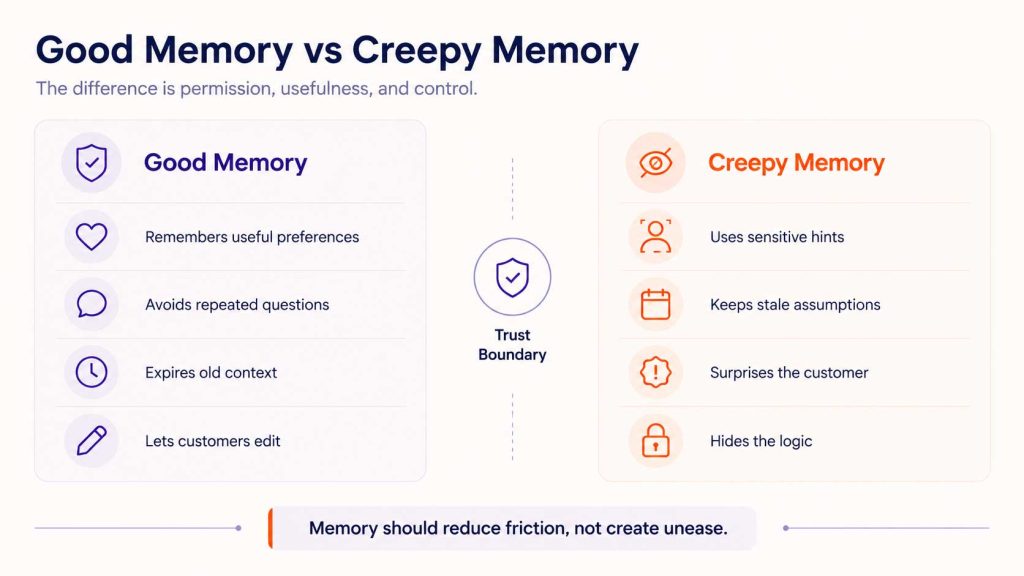
For e-commerce teams, this means building memory around clear use cases. Remember size preferences if it reduces returns. Remember delivery preferences if it improves convenience. Remember category interests if it improves discovery. Remember loyalty behavior if it improves rewards. Remember support issues if it prevents repeated frustration. But do not use sensitive hints, one-time purchases, outdated signals, or private support context in ways that surprise the customer.
This is where a real-time customer segmentation platform, retail segmentation platform, and shopper segmentation platform need discipline. Segmentation should not only ask, “Can we target this customer?” It should ask, “Should we use this memory in this moment?”
The obvious answer is not “remember everything.” The useful answer is “remember only what improves the relationship and can survive a trust test.”
Where e-commerce personalization usually breaks.
The first break happens in product discovery. A shopper browses one product or category, and the system treats that single signal like a long-term preference.
The second break happens after purchase. The customer buys once, but the brand keeps pushing the same product without understanding whether the need is complete, recurring, gifted, returned, or irrelevant.
The third break happens in retention. Loyalty, CRM, email, WhatsApp, ads, app notifications, and support teams all use different versions of the customer. One channel remembers too much. Another remembers nothing. The customer gets repeated, irrelevant, or contradictory messages.
The fourth break happens after service issues. A shopper complains, returns, exchanges, or flags dissatisfaction. If that context does not travel into future journeys, the brand keeps selling like nothing happened. If it travels too aggressively, the brand feels intrusive. Both are bad.
This is why commerce orchestration platform, customer engagement platform retail, and commerce experience platform thinking matters. E-commerce personalization is not only about recommendations. It is about making product, content, CRM, support, loyalty, automation, segmentation, and retention work from one responsible memory model.
What e-commerce leaders should fix now.
First, define memory categories. Separate short-term browsing context, saved preferences, purchase history, support context, loyalty behavior, sensitive signals, and inferred intent.
Second, decide what should expire. Not every signal deserves a permanent place in the profile.
Third, make customer control visible. If customers can update preferences, pause categories, correct sizes, change communication choices, or remove irrelevant interests, trust improves.
Fourth, connect memory across the journey. A unified commerce platform retail or omnichannel commerce platform should make the customer feel remembered in helpful ways across web, app, store, CRM, support, loyalty, and post-purchase journeys.
Fifth, connect automation with governance. An ecommerce automation platform and ecommerce workflow automation layer should not blindly trigger messages from stale data. Automation should understand context, recency, permission, channel, and customer sensitivity.
Sixth, use memory to reduce friction, not increase pressure. The best personalization helps the customer choose, buy, return, reorder, discover, and get support more easily. If memory only helps the brand sell harder, customers will feel it.
Where Weaddo fits.
Weaddo helps e-commerce and D2C brands move from scattered personalization tactics to a connected, trust-aware commerce operating layer. That means connecting customer data, product data, CRM, automation, segmentation, loyalty, content, support, analytics, and governance so personalization works from clearer context and better rules.
For a Head of E-commerce, Weaddo helps connect product discovery, customer profiles, offers, support signals, returns, loyalty, and retention into one journey. For a CMO or Growth Head, it helps improve relevance without turning personalization into noise. For CRM and Retention teams, it helps build smarter journeys based on useful memory, not stale assumptions. For CIOs and CTOs, it helps create the data and governance foundation needed before AI personalization scales.
The goal is not to build a brand that remembers everything. The goal is to build a brand that remembers what matters and knows when to forget.
That is how e-commerce businesses become Unified. Intelligent. Ready. Unified, because shopper context moves across systems. Intelligent, because memory becomes useful signal, not creepy targeting. Ready, because AI personalization can scale on top of consent, governance, and trust.
The rule is simple.
The future of personalization is not about remembering the most. It is about remembering the right things, with the right permission, at the right moment, for a reason the customer can feel.
A bigger memory system will not fix a broken commerce journey. It may expose it faster. If product data, customer data, support history, preferences, consent, segmentation, and automation are disconnected, AI personalization will not feel intelligent. It will feel inconsistent, outdated, or invasive.
Where does your growth stop? It may stop where personalization loses trust.
The e-commerce brands that win the next stage will Bridge the Future Gap by building personalization systems that are useful, governed, customer-controlled, and connected.
Talk to Weaddo
Talk to Weaddo to identify where your e-commerce personalization, customer data, segmentation, automation, consent, and retention journeys need a stronger operating layer before AI memory scales.









Leave a Reply