The Digital Front Door Is a Lie If the Back Door Is Broken
by
vikas weaddo
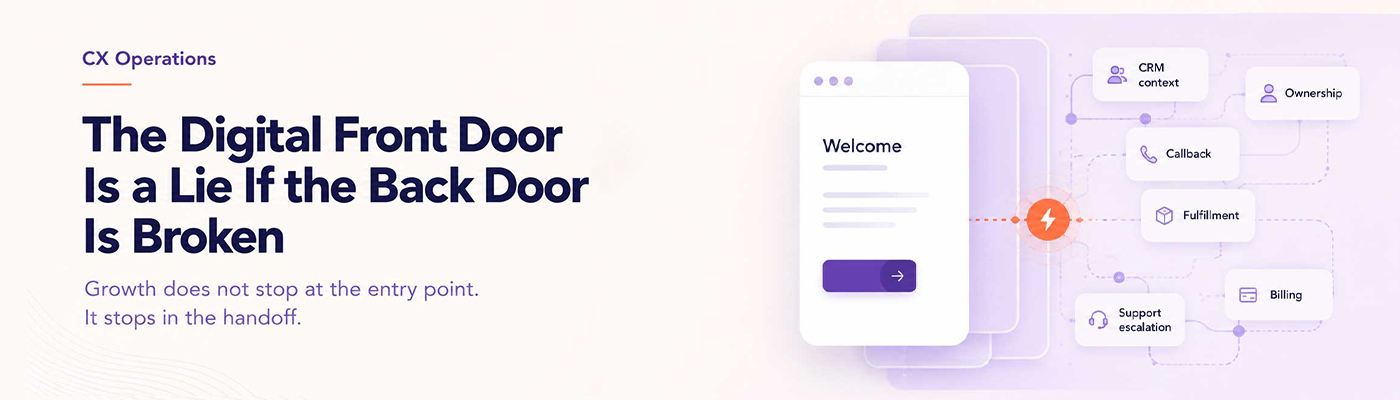
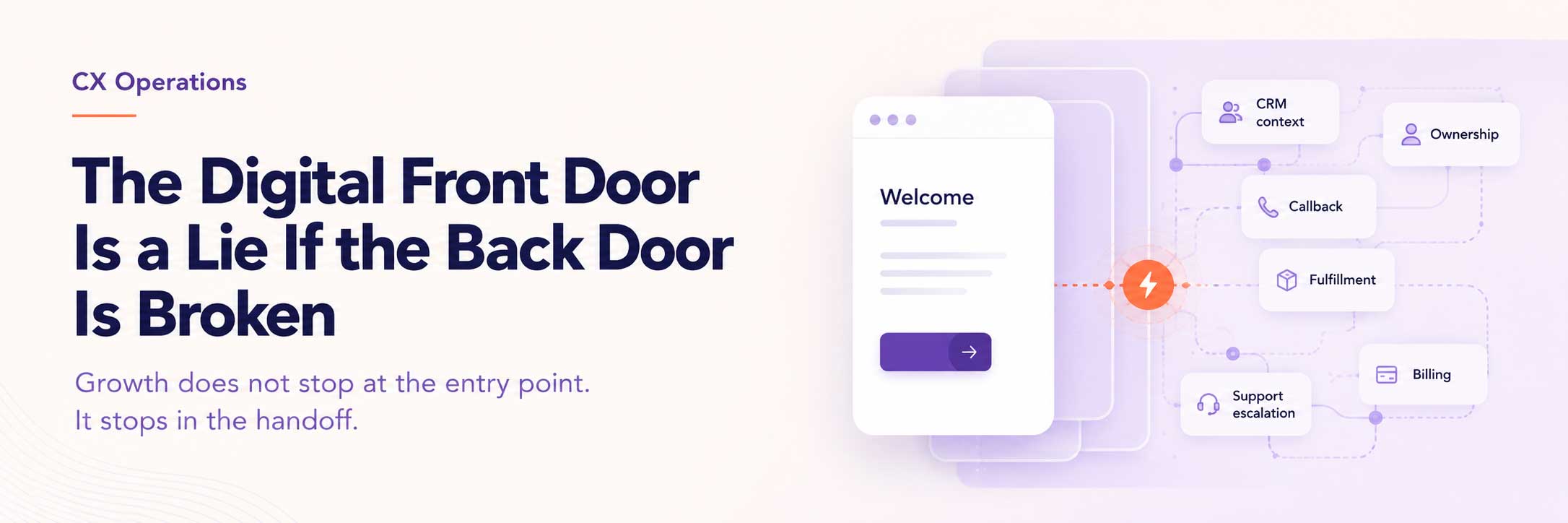
Everyone wants a better digital front door. Fewer teams want to inspect what happens after entry.
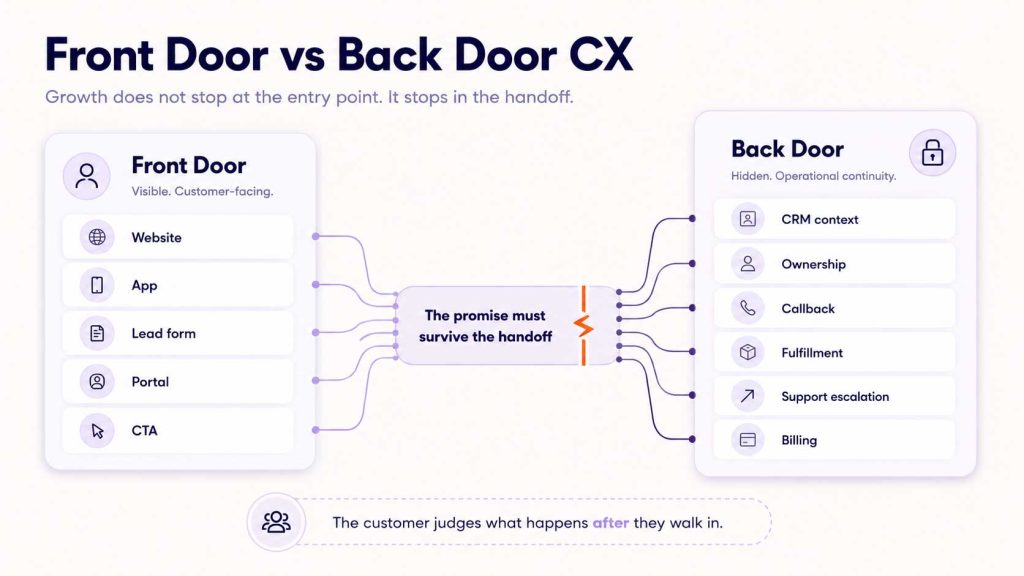
Healthcare businesses love the phrase “digital front door.” It sounds modern, safe, and boardroom-ready. Website. App. Patient portal. Online booking. WhatsApp enquiry. Lead form. Doctor profile. Health package page. Clean CTA. Fast confirmation. Very digital.
Then the patient walks in.
The online booking does not sync with front desk reality. The call center has partial context. The CRM says lead. HIS says patient. Billing has another version. Lab and pharmacy do not see the full journey. Reports are chased manually. Follow-up depends on someone remembering. The patient repeats information even after entering through a “digital” channel.
That is where the illusion breaks. A shiny front door cannot save a patient journey that falls apart after entry. For a Healthcare COO / Operations Head, this is not a website issue. It is an operating flow issue. A healthcare digital experience platform has to connect the promise made at the front end with the work that happens behind it.
The journey does not break where the homepage team is looking.
Most healthcare teams obsess over the visible layer because it is easier to inspect. The hero section. The appointment button. The form. The confirmation message. The doctor profile. The patient portal login. These matter, but they are not the whole experience.
Patients judge the journey after the click. Did someone call back? Was the booking confirmed? Did the front desk have context? Was the slot actually available? Did the patient need to repeat information? Did billing know the package? Did the lab report flow back? Did pharmacy connect? Did follow-up happen? Did anyone know where the patient dropped?
This is why the patient journey platform conversation matters. The digital front door starts the journey. It does not complete it. Growth stops where the hospital cannot carry patient context from one step to the next.
This is where most healthcare digital transformation loses the plot.
A hospital launches a new website and calls it transformation. But the appointment form still feeds a manual queue. The app looks premium, but the call center cannot see patient history. The patient portal exists, but reports still need chasing. The campaign performs, but operations cannot fulfill demand smoothly. The doctor page gets traffic, but marketing cannot connect visits to revenue.
The dashboard says the front door is working. The patient experience says the journey is leaking.
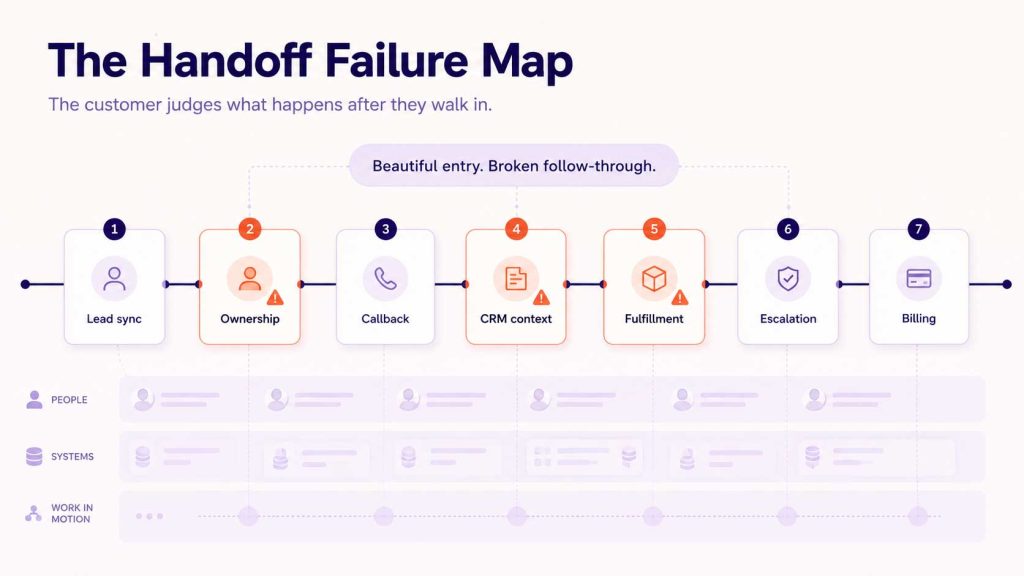
That is the uncomfortable part. Healthcare growth does not stop at discovery. It stops between enquiry and booking, booking and visit, visit and billing, billing and reports, reports and follow-up, follow-up and retention. A patient engagement platform healthcare approach has to support the full journey, not just the entry point.
The patient does not care which system failed. They only feel the handoff.
The broken back door has a pattern.
You can see the pattern in almost every growing healthcare organization. Enquiries come from Google, Meta, SEO, WhatsApp, referrals, doctor pages, health packages, and call centers. But the context does not travel cleanly. Marketing sees leads. Front desk sees bookings. HIS sees visits. Billing sees transactions. Lab sees tests. Pharmacy sees prescriptions. Leadership sees delayed reports. The patient sees one hospital.
This is why a healthcare customer data platform and healthcare data unification platform matter. Without connected patient context, every team works from a different truth. That creates repeated questions, manual chasing, delayed handoffs, weak attribution, and missed follow-ups.
The ugly truth is simple: patient experience is often decided by the least visible workflow in the hospital. Not the homepage. Not the app screen. The handoff.
A better digital front door starts behind the scenes.
The fix is not making the appointment form prettier. The fix is designing what happens after the form.
Map the journey from patient intent to completed outcome. Define who owns every handoff. Connect website, CRM, call center, appointment engine, HIS, lab, pharmacy, billing, reports, patient portal, feedback, and follow-up. Build SLAs into the process. Make patient status visible. Remove duplicate data collection. Create recovery paths for no-shows, missed callbacks, delayed reports, and dropped follow-ups.
A hospital patient portal software layer can help, but only if it connects to the real operating journey. A portal that simply gives patients another login without fixing context is not transformation. It is another front door into the same broken corridor.
Where healthcare growth usually leaks after the digital front door.
The first leak is enquiry-to-booking. Patients show interest, but calls, forms, WhatsApp, and CRM entries do not move into one owned flow. The second leak is booking-to-visit. Appointment reminders, confirmations, prep instructions, rescheduling, and no-show recovery depend too much on manual effort.
The third leak is visit-to-revenue. The patient comes in, but billing, diagnostics, pharmacy, packages, and follow-up are not connected clearly enough. The fourth leak is post-visit retention. The patient leaves, reports are delayed, next steps are unclear, and follow-up depends on scattered records.
This is where a healthcare analytics platform, healthcare marketing attribution platform, and patient acquisition attribution platform become important. Leadership should be able to see which campaigns, doctors, specialties, locations, packages, and channels create actual patient movement, not just leads.
A lead is not growth until the patient completes the journey.
What healthcare leaders should fix now.
First, stop measuring the digital front door in isolation. Website visits, form fills, bookings, app downloads, and portal logins are useful, but they do not prove that the patient journey works. Second, connect patient context across systems. CRM, HIS, call center, front desk, lab, pharmacy, billing, reports, and follow-up should not behave like separate businesses.
Third, make handoffs visible. Every patient stage should have an owner, status, next step, escalation path, and recovery logic. Fourth, build content and communication governance. Doctor profiles, specialty pages, package pages, FAQs, instructions, reminders, report updates, and follow-up messages should stay consistent across locations and teams. This is where a healthcare CMS platform supports more than marketing. It supports operational clarity.
Fifth, use analytics to find where growth stops. Is the leak at enquiry? Booking? No-show? Visit completion? Diagnostics? Pharmacy? Reports? Follow-up? Retention? The hospital cannot fix what leadership sees too late.
Where Weaddo fits.
Weaddo helps healthcare businesses connect the digital front door with the operating layer behind it. That means aligning patient journeys, CRM, HIS, call center, appointment flow, patient portal, billing, lab, pharmacy, reports, analytics, content, automation, and follow-up into one connected growth system.
For a Healthcare COO / Operations Head, Weaddo helps reduce manual chasing, broken handoffs, repeated data entry, and operational blind spots. For a CMO or Growth Head, it helps connect campaigns to real patient outcomes. For CIOs and CTOs, it helps build the integration and data foundation needed for AI-readiness. For Patient Experience leaders, it helps make patient context travel instead of making the patient repeat it.
The goal is not another digital touchpoint. The goal is one connected patient journey.
That is how healthcare businesses become Unified. Intelligent. Ready. Unified, because patient context moves. Intelligent, because leaders see leakage earlier. Ready, because AI and automation can only work when the operating layer is connected.
The rule is simple.
The digital front door is not the patient journey. It is only the entry point.
If the patient books online but repeats information at reception, the front door failed. If the campaign creates demand but the call center cannot carry context, the front door failed. If the portal exists but reports and follow-up still depend on manual chasing, the front door failed.
Where does your healthcare growth stop? It may stop right after the patient enters.
The healthcare brands that win the next stage will Bridge the Future Gap by connecting the visible experience with the hidden operating layer behind it. The future-ready hospital is not the one with the prettiest front door. It is the one where the patient journey keeps moving.
We can help…
Talk to Weaddo to identify where your healthcare digital front door, CRM, HIS, call center, booking, billing, reports, and follow-up journeys are disconnected, and how to build a connected operating layer that carries patients from interest to retention.




Leave a Reply